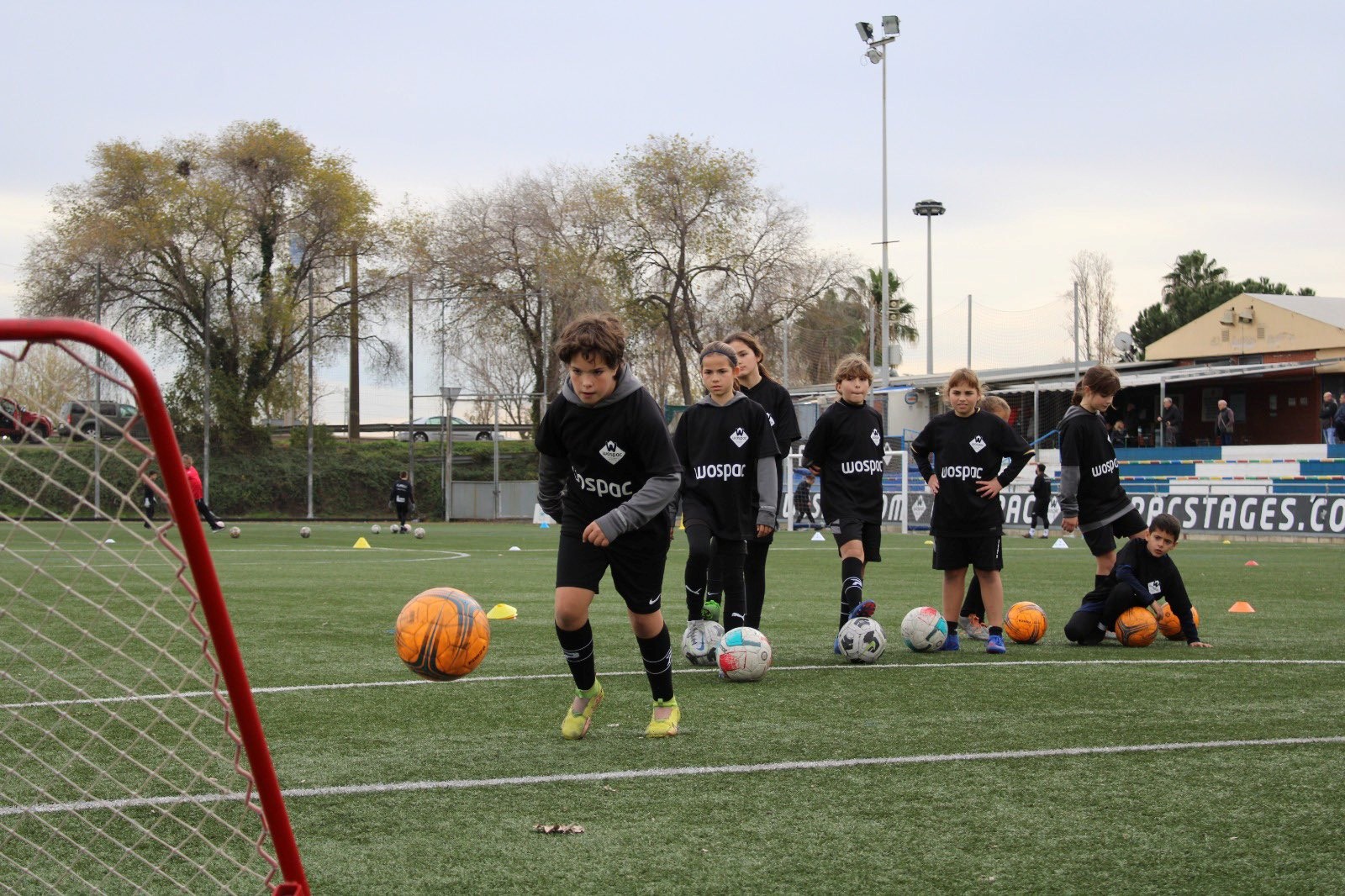
A striker’s work changes with the team’s plan, the position of the ball and the movement of opponents. Scoring is part of the role, but useful attacking play also includes creating space, combining with team-mates and responding when possession changes. There is no single instruction to remain near the penalty area throughout a match.
Start by understanding what the team needs from the position. A central forward may be asked to threaten space behind, receive between lines or support a wide attack. The right choice depends on the situation and the coach’s plan, rather than a fixed picture of a born goalscorer.

Concentration and awareness Before moving, look at the ball-carrier’s options and the positions of defenders and team-mates. Scanning can help a striker recognise a receiving space or notice that another run would be more useful. Keep updating that information as the play changes.
Concentration also matters after an attempt or a misplaced pass. The next action may involve pressing, recovering into shape or preparing for a rebound. Follow the team’s responsibilities instead of assuming that every loose ball can or should be chased.
Patience means timing an action, not waiting in the box for eighty-nine minutes. A striker may need to check away, delay a run or come towards the ball to support play. Equally, moving too early can close a receiving space before the pass is possible.
Observe what the player in possession can see and do. If the pass is unavailable, adjust the movement rather than repeatedly demanding the same ball. A well-timed run can create an option for someone else even when the striker does not receive.
Confidence is useful when it supports a clear decision, but a scoring opportunity is never guaranteed. Choose between shooting, passing and keeping possession according to pressure and the options available. A difficult angle or blocked shooting lane may make a team-mate the better choice.
Finishing can use different contact surfaces and amounts of force. A firm instep strike is one option; placement or a quick controlled contact may suit another situation. Preparation, balance and the ball’s position matter. Avoid forcing a joint angle or trying to generate maximum power on every attempt.
Aerial play is subject to the player’s age, local rules and the coach’s appropriate guidance. Heading is not a compulsory exercise for every young striker, and this overview does not prescribe a heading routine. Attacking work can focus on scanning, movement, receiving and foot-based finishing without introducing repeated head contact.
Composure involves using the time actually available. Sometimes there is room for an additional touch; sometimes a defender or goalkeeper makes a quicker action necessary. There is no universal extra split second in the penalty area. A coach can help the player recognise the difference through suitable game situations.
When finishing, observe the goalkeeper, defenders and available target area. The aim is not always a narrow gap beside a post. A clear passing option, a blocked lane or an approaching defender can change the appropriate decision. Review whether the player selected a workable option as well as whether the attempt scored.
Movement to lose a marker can involve a change of direction or pace. For example, checking towards the ball may affect a defender’s position before a run into another space. The action should be timed with the ball-carrier and the wider attack.
A feint has a purpose when it helps create a usable option. Repeating a movement without noticing the defender’s response can make it predictable. Ask what space was created and whether a pass could realistically reach it.
Connect striker practice with the team’s attacking plan
A useful practice task includes a decision. The striker might choose whether to receive to feet or move behind, while a team-mate chooses when to pass. The aim is to connect movement, communication and the action after receiving.
The coach can change the space or add an appropriate defender to explore a recurring match situation. Pressure should serve the learning aim and suit the player, rather than simply make the task harder.
Review what the player noticed before acting. A missed attempt can still follow a sensible decision, while a goal does not automatically show that the preceding choice was the best available one.
Measure useful work beyond the goal total
Goals matter, but a short review should also consider the options created for team-mates. A supporting run, a controlled lay-off or a delayed movement can contribute to an attack without appearing as the final touch.
- Notice whether the run fits the ball-carrier’s body position and available passing lane.
- Check the first touch and whether it leaves a useful next action under the actual pressure.
- Discuss how the striker responds to a turnover and follows the team’s defensive responsibilities.
Find a setting for position-specific feedback
Soccer Academy Barcelona
Compare Barcelona academy formats when looking for a coaching setting that can address movement and attacking decisions.
Football Academy Spain
Use the Spain academy overview to discuss the wider training routine and how the proposed group fits the player’s experience.
Contact WOSPAC
Explain the player’s usual role, level and learning priority when asking WOSPAC about available sessions.
Questions about a striker’s decisions
Should a striker always stay inside the penalty area?
No. Positioning depends on the team’s plan and the phase of play. A striker may need to support outside the area, threaten space behind or create an option for another attacker.
Does patience mean delaying every finish?
No. Judge the time and pressure available. Sometimes a first-time action is useful; in another situation an extra touch or pass may be the better decision.
What can be reviewed when the striker does not score?
Review scanning, movement timing, receiving choices, support for team-mates and the response to losing possession. A goal total alone does not describe the quality of every attacking decision.
Bring one recurring match situation to the coach
Describe where the striker receives, what the defenders tend to do and which decision is difficult. Agree one manageable focus and review examples from a suitable task. The next step should help the player understand the game situation, rather than rely on a promise of scoring in every match.
Explore coaching for attacking decisions
Questions about striker practice
How does scanning help a forward choose a run?
Looking at defenders, team-mates and the ball-carrier’s options can help identify a receiving space and useful timing. The information needs updating as play changes.
Must a young striker complete heading drills?
This overview does not prescribe heading. Any aerial work must follow the player’s age-related rules and appropriate guidance; movement and foot-based finishing can be practised without repeated head contact.
Is the hardest shot always the strongest finishing choice?
No. The available target, pressure and passing options affect the decision. Placement, a quick controlled action or a pass may be more suitable than maximum force.
What makes a movement to lose a defender useful?
It creates a usable option for the attack and is timed with the ball-carrier. A change of direction has limited value if no pass or next action can exploit the space.