The considerations below concern placement, run-up, attention and timing. They provide subjects to discuss in coaching, rather than a prescription for a particular player or an assurance of scoring.
Comparing attempts also requires care about what is being compared. A changed target, instruction or opposition can alter the task. Describing those conditions makes a review easier to interpret than treating every conversion or miss as a measurement of one technique.
Considering preparation and strategy
Target choice and the strike
Placement and striking the ball are related but distinct questions. A player may choose a target before starting, or use a strategy that responds to the goalkeeper. In either case, intending a particular location and executing the kick are not the same thing. A successful attempt does not prove that every part of the decision was ideal, just as a missed attempt does not identify one cause on its own.
The bottom corner should not be presented as the universally best target. A claim of that kind would need directly relevant evidence about the players, conditions and alternatives compared. A study of decision timing does not establish an optimum target height or location. Keep the question being investigated separate from the advice being drawn from it.
For a coaching discussion, the useful starting point is what the player intended and what happened during the attempt. That makes feedback more specific than a general instruction to find the perfect spot. It also leaves room to distinguish an execution difficulty from a change of decision, without assigning a universal solution to every player.
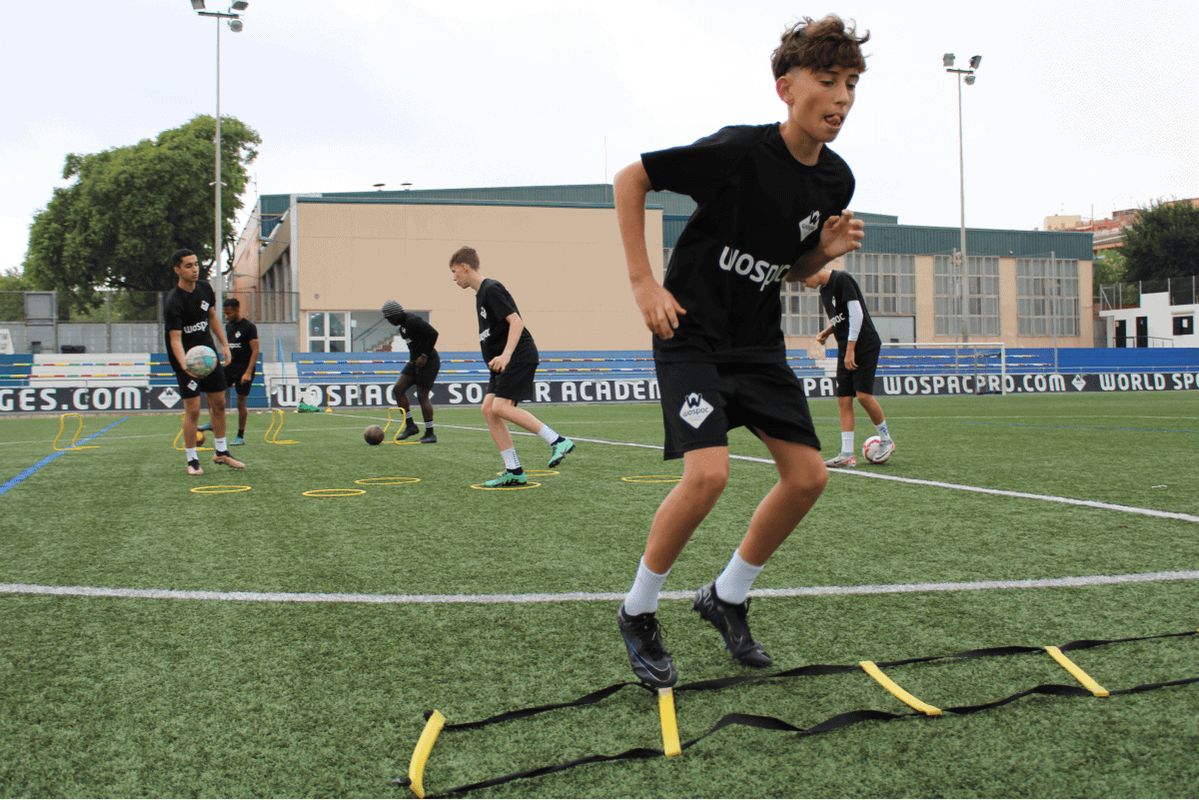
The run-up and striking action
The run-up is the approach to the ball, while the strike is the action that sends it toward the target. Calling the whole sequence a stroke can blur those different parts. A description should make clear which action is being discussed rather than claim that a particular number of steps automatically produces accuracy.
Two or three steps are not a universal optimum established by the evidence described here. A longer approach is not automatically an error, and a shorter one does not guarantee freedom from distraction. The appropriate discussion concerns the actual player, the task and the feedback available, without turning a general observation into an individual prescription.
A description of a run-up should identify what was observed and which question is being considered. Noticing a movement in one attempt is different from demonstrating that every player should adopt it. Keep observations separate from instructions, and avoid using an attractive technique label as a recipe for a successful kick.
Attention and the chosen strategy
A keeper-independent strategy involves selecting the target in advance and not changing direction in response to the goalkeeper during the approach. A keeper-dependent strategy makes the choice in relation to the goalkeeper’s actions. These are different decision plans, rather than a simple division between a good and bad way to take a penalty.
The role of attention needs to be considered within that plan. Looking toward a target, attending to a goalkeeper and preparing the strike are not interchangeable instructions. A general statement that looking at the ball makes direction unpredictable goes beyond what a strategy description can establish. Nor should an attempt to mislead the goalkeeper be presented as necessarily helpful or harmful for every player.
Video ratings of attention can help researchers classify a sequence, but they do not become a universal instruction about where every player must look at each instant. When discussing a particular attempt, clarify the intended strategy and what information the player was trying to use. That gives the conversation a defined subject without promising deception, composure or accuracy.
Responding to the goalkeeper
The goalkeeper may move or begin a dive before the taker strikes the ball. That timing can interact with the taker’s chosen strategy. A knee or hip movement should not be described as a guaranteed indication of the final direction, and waiting for a movement does not remove the challenge of carrying out the kick.
Noël, van der Kamp and Klatt’s 2021 study examined 395 kicks from 41 penalty shoot-outs at World Cups and European Championships between 1984 and 2016. The sample concerned elite historical shoot-outs, not hundreds of separate games or a youth training group. Its question was how goalkeeper and taker strategies interacted in relation to the outcome.
The study’s early and late movement categories were defined relative to ball contact. Those labels should not be converted into a universal claim that most goalkeepers make an error by moving too early. The authors considered combinations of strategies, with the time available to adjust a kick also relevant to the discussion. A late change may create an execution problem; it is not an automatic way to beat a goalkeeper.
Research reference: Noël, van der Kamp and Klatt (2021), The Interplay of Goalkeepers and Penalty Takers Affects Their Chances of Success, Frontiers in Psychology 12, article 645312, DOI 10.3389/fpsyg.2021.645312.

These considerations are more useful as questions than as four instructions for a perfect penalty: what was the intended strategy, how was it carried out and what feedback would help explain the attempt? A single result or still photograph cannot establish a reliable pattern or prove an optimal technique.
Keep the limits of the evidence in view. Findings from elite historical shoot-outs can inform a discussion without supplying an individual scoring probability or a method suitable for everyone. Coaching feedback should remain clear about the player and activity concerned, with room to distinguish observation, interpretation and a possible focus for practice.
Any current training offer needs its own dates and terms. The historical invitation in this article linked to the technical training programme!

THIS IS WOSPAC
What to compare next after The PERFECT PENALTY KICK
Questions about penalty preparation and evidence
Can a particular technique guarantee a perfect penalty?
No technique described here establishes that guarantee. Target choice, execution and the goalkeeper’s actions need to be distinguished, and a result does not prove that every part of the decision was optimal.
How do keeper-independent and keeper-dependent strategies differ?
A keeper-independent strategy selects the target in advance without changing direction in response to the keeper during the approach. A keeper-dependent strategy relates the choice to the keeper’s actions. They are different decision plans, not a universal good-versus-bad classification.
Does research establish two or three run-up steps as best for everyone?
The study discussed here does not establish a universal step count. It examines interactions between penalty takers and goalkeepers in elite historical shoot-outs, so it should not be turned into a fixed run-up prescription for every player.
What context belongs with the 2021 penalty study?
Noël, van der Kamp and Klatt examined 395 kicks from 41 World Cup and European Championship shoot-outs in 1984–2016. That observational context differs from a youth session and does not supply an individual success probability.