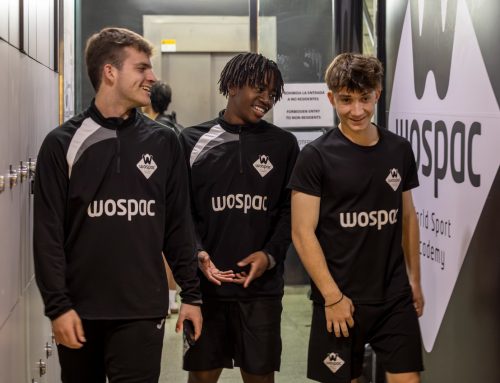
Technical execution and decisions in play are closely related football subjects. A player needs to practise actions with the ball and recognise when those actions fit the situation. When considering a WOSPAC Soccer Academy in Barcelona, look at how the proposed sessions address both. The actual group level, coaching format and feedback matter more than an assurance of future success.
Useful questions concern receiving, passing, movement and understanding the task being practised. A clear explanation should connect an exercise with its purpose while allowing for different experience and responses. The following subjects can help focus a discussion of the training offer, without assuming a fixed method, facility or personal service for every participant.
Practising football fundamentals
Barcelona’s WOSPAC Soccer Academy offer should explain the entry level and group format rather than assume that everyone arrives with the basics mastered. Receiving, passing, dribbling and shooting involve different actions and decisions. Repetition can give a player time to revisit a movement; game practice introduces opponents, teammates and changing space.
Ask what coaching feedback is included and how it is delivered. An observation about body position or the timing of a pass can give an exercise a clear focus. It does not mean that correction is instantaneous or that perfect technique follows. The pace of learning varies, and practice intensity needs to be understood through the actual programme rather than a universal match-intensity promise.
If an offer mentions unique personalized development plans, establish what the review involves, who provides it and how often goals are discussed. An individual focus within a group is different from a unique timetable for every player. It can be useful to revisit the same topic over time without assuming that no two participants ever follow the same exercise or that improvement proceeds at a fixed rate.

Strategic Knowledge is Integrated in Daily Training Repetition
The tactical aspect of the game is given the same level of attention as physical training. Quick thinking and purposeful movement is ingrained during the entire course of training at the WOSPAC Soccer Academy in Barcelona. Ask how positioning, support and decisions are explored in the advertised group. An exercise might focus on creating a passing option, recognising pressure or deciding when to move the ball. The relevant question is what is practised and explained, rather than whether a session is described as advanced.
If workshops, video review or performance analysis are advertised, confirm their content, frequency and staff responsibilities. Those services should not be inferred from a broad tactical-training description. A player can discuss what was noticed during an exercise and what might be tried next. Such feedback is a learning opportunity, not evidence of effortless adaptation to a higher club or national competition.
Understanding decisions during game practice
One of WOSPAC’s Soccer Academy subjects to discuss is game-based practice: an exercise can ask players to recognise space, work with teammates or respond to a changing score. A particular activity name, such as the WOSPAC Challenge, needs confirmation before it is treated as a scheduled programme feature. The same applies to any advertised frequency, venue or special physical condition.
A time limit or changed rule can alter the decisions available, but it should be clear what the task is intended to explore. There is no need to claim hundreds of scenarios or high-altitude activity to explain that purpose. Ask about the actual workload, group level and arrangements for raising difficulties. A simulation cannot establish that no participant’s limits will be exceeded or guarantee confidence and endurance.
Coaches Implement Elite Spanish Football Methodologies
References to Spanish football can help explain an idea, but they do not identify the staff assigned to a group or establish an agreement with a club. Where an individual UEFA licence or playing background is advertised, ask which qualification, level, validity and role are involved. A coaching credential belongs to its holder rather than to a national style label.
Positioning and support can be discussed in practical terms: creating an option for a teammate, noticing an opponent and deciding when to change position. Exercises may explore those subjects where included. Neither a familiar phrase such as juego de posicion nor a link to the Soccer Academy in Barcelona establishes a universal ability to control a match. Look for an explanation of the sessions and feedback actually provided. Tactical understanding develops through experience and discussion, with individual responses; it should not be treated as an automatic result of joining a programme.
International Outlook Improves Competitiveness
Matches need their own practical details. Ask which fixtures or competitions are confirmed, the level involved and how participation is decided. An internal game, an arranged friendly and an official league match have different purposes and conditions. Playing a visiting side should not be assumed from a general international description.
Reviewing a game can focus on particular actions rather than an overall promise of competitiveness. A player might discuss the support offered to a teammate or the decision after losing possession. Opponents and match conditions vary, so participation does not guarantee a defined learning effect or a new playing identity. The Soccer Academy in Barcelona description also needs to distinguish the training group from any school or course. Confirm the actual education provider, group arrangements and communication support where relevant. People can bring different experiences to shared practice, without nationality guaranteeing healthy competition, team cohesion or a particular classroom environment.
Academic Structure Supports Long-Term Success
The Soccer Academy in Barcelona proposal should identify any education separately from the football schedule. Ask which school or course teaches the student, what qualification is involved and the admission, language and assessment requirements. A general quality label cannot establish accreditation or suitability.
Compare lessons, travel, independent study and rest with the actual training times. Clarify the responsibilities of teachers, coaches and residence staff, along with the support included if commitments conflict. Planning can provide structure, but it does not ensure winning results in school and football. The educational choice should also make sense on its own terms, with the student’s interests and the institution’s requirements kept in view.
Conclusion
The WOSPAC Soccer Academy in Barcelona can be assessed through the technical and tactical subjects actually offered, the coaching group and the practical terms of the stay. Confirm any fixtures, analysis service, educational provision or specialist support individually rather than treating them as a complete development package.
There is no need to make unsupported comparisons with other European academies to discuss a player’s needs. A useful proposal connects the present playing level with realistic practice goals and clear responsibilities. WOSPAC’s training offer should be considered on those details, with progress reviewed as an individual process. Participation does not guarantee readiness for a global stage, a scholarship or a professional career.
Helpful follow-on reads after How WOSPAC Soccer Academy in Barcelona Builds Technical and Tactical Excellence
Questions about technical and tactical practice
What is the difference between practising a technique and making a tactical decision?
Technical practice concerns actions such as receiving or passing. Tactical decisions involve when and why to use them in relation to space, teammates and opponents. Ask how the advertised sessions connect those subjects for the group.
Does an individual training focus mean a separate programme for every player?
An individual focus can identify a topic within shared practice. A separate plan or review service needs its own content and frequency; a personalised description does not establish a unique timetable for every participant.
What should be established about a named WOSPAC Challenge activity?
Confirm whether that activity is actually offered for the group, its purpose, venue, frequency and workload. Do not infer high-altitude training, a fixed number of scenarios or guaranteed physical limits from the name.
How should video analysis or strategy workshops be assessed?
Check whether they are included, who leads them and how often they take place. A useful description explains what is reviewed and how feedback is discussed, without promising automatic tactical mastery or progression to a higher club.