
Barcelona Football Academy Blog

International Baccalaureate Program with Full Boarding: A Complete Guide
Choosing study and boarding arrangements involves several separate decisions: the education programme, the school delivering it and the accommodation provider. Compare the actual subjects, entry requirements, daily commitments and support against the student's needs. Boarding can provide a particular living routine, but it does not determine academic results, independence or personal development. The International Baccalaureate offers different programmes, each with its own age range and requirements. Identify the specific programme and the school authorised to offer it. The description International Baccalaureate Program with Full Boarding combines a study subject with a living arrangement; it does not name a school or an IB programme category. Confirm the education provider separately from WOSPAC football activities and the boarding operator. Day and boarding arrangements should be compared through their actual teaching, study support and supervision, rather than a general assumption about disruption or quality. Understanding the International Baccalaureate Program with Full Boarding Boarding terms should identify the residence address and operator, the dates covered and the arrangements for weekends and holidays. Check whether school and accommodation share a site, and how travel between venues is organised. Residence does not itself mean round-the-clock teaching. Ask who supervises study, at what times and with what responsibilities. Mentoring, tutoring and collaborative activities should be listed where offered. Clarify how school and residential staff communicate, including who to contact about academic work and who handles accommodation concerns. Feature Full Boarding IB Program Academic Curriculum Named IB programme and authorised school to verify Learning Environment Residence location and term coverage to confirm Student Supervision Supervision and study-support hours to confirm Personal Development Focus Strong emphasis on independence Cultural Exposure Actual cohort and language arrangements to confirm A planned routine can help a student organise lessons, assignments and shared responsibilities. These are opportunities to practise study habits and communication, with different responses from different students. University preparation depends on the actual programme, subjects, assessments and the requirements of each institution. Academic Depth and Holistic Development The educational framework of the International Baccalaureate Program should be checked through the named school and specific programme. Ask about the subjects available, teaching language, entry conditions and assessment format. Boarding is a separate arrangement and does not establish the content or recognition of the academic course. Curriculum Structure and Learning Methods Curriculum and assessment vary by IB programme. For example, the Diploma Programme has six subject groups and a core; that description should not be applied to every IB programme. The authorised school should explain the actual subject choices, coursework, examinations and award requirements for the course being considered. Life Skills Through Residential Learning Living with others provides occasions to practise time management, communication and shared responsibilities. Ask how residents receive help with schedules, assignments and day-to-day concerns, and what independence is expected at the student's age. Adjustment takes different forms. A supportive routine can be useful without assuring confidence, emotional growth or a particular personal outcome. Named contacts and a clear process for raising concerns are practical details to establish before arrival. [...]

1 Week Level Test & Tryouts Boarding Program: Structure, Evaluation, and Value
A 1 Week Level Test & Tryouts Boarding Program is a program which aims to give a detailed evaluation period along with a short-term boarding experience. Such a program allows those involved to show their level, adaptability, and commitment not only during the days but also over the weeks. Thus, by having the evaluation over the entire week, the evaluators get a more comprehensive and even impression of the skills of the individuals. In contrast to short tryouts, a one-week boarding program is more about the participant's stability. The participants are supposed to follow the daily routines, take part in the repeated training or testing sessions, and get a familiarized environment similar to that of the longer-term programs. Program Overview and Core Purpose A 1 Week Level Test & Tryouts Boarding Program has primarily two major functions. Primarily, it facilitates a detailed level evaluation over several days. Secondly, in a short and controlled time frame, it acquaints the participants with the boarding routines and the program expectations. Typically the program keeps a stable daily timetable. The start of the day may be dedicated to tests or skill-based sessions. The afternoons are generally filled with the implementation of activities, attending to the work done, or group interaction. The evenings are usually planned around relaxation, self-reflection, or a period of rest under the staff's supervision. The inclusion of boarding is very important for the assessment. Being on-site thus shows the ability to manage one's time, be independent, and interact with others. Element Description Program length One full week Evaluation style Ongoing, multi-day assessment Boarding Supervised residential stay Daily structure Training, testing, review Focus Consistency and adaptability Evaluation Process and Daily Structure The decision-making criteria for a 1 Week Level Test & Tryouts Boarding Program are not immediate and simple, but rather gradual and layered. Evaluators take into account the performances of the participants under different conditions and days instead of relying on a single performance only. Initial Level Assessment The very first stage is, more often than not, associated with baseline testing. These sessions serve to define the starting levels and also to identify the strengths or the gaps. The results become the tool that guides the way participants are grouped or monitored during the week. Progressive Observation Evaluators, on the other hand, are not content just to observe the initial level only; they look for indication of the progress, the reaction to the feedback, and the consistency as well throughout the week. The most important point here is that this stage shows the capacity of the participants to learn rather than their isolated ability. Moreover, the planned repetition provides a more fair way of evaluation. Participants get the time to adjust, to recover and to show their improvement. Comparison With Other Tryout Formats Diverse evaluation formats are designed to accommodate various requirements. Single-day tryouts emphasize speed and efficiency. Long-term placements are all about thorough development. A 1 Week Level Test & Tryouts Boarding Program is somewhat of a compromise between these [...]
1 Day Summer Camp Boarding Program: A Wospac Structured Summer Experience
A brief experience is what a 1 day summer camp boarding program aims to provide. Their goal is to combine activities, learning, and boarding under supervision in a single day. Such programs are usually picked by families who want a concentrated introduction to the life of the camp without making a long-term commitment. The format gives the opportunity to experience organized schedules, interaction with the group, and guided activities in a safe place. In contrast to the long summer camps, a one-day boarding program Wospac concentrates on the intensity and the balance of the day. People enrolled in the program are to take part in planned sessions which can be sports, creative workshops, teamwork exercises, or educational modules. The boarding aspect brings in the idea of responsibility and routine, even though the time is short. Overview and Core Structure of the Program A 1 Day Summer Camp Boarding Program revolves around a very detailed timetable. Every movement from the arrival to the departure is planned out to ensure safety, engagement, and continuity. Typically, the program starts with orientation and group allocation and then moves on to the activity blocks and rest periods which are under supervision. The boarding part, even if it is only for a single day, acquaints the participants with the shared accommodation rules and routines. It may also comprise assigned spaces, supervised downtime, and the structured transitions from one activity to another. The purpose is to make a realistic yet manageable camp environment. Such programs are frequently appreciated for their being predictable. Parents and participants know the length, content, and organization ahead of time. Feature Description Program length Single full day Activity format Scheduled group activities Boarding element Supervised short-term stay Supervision Trained staff oversight Environment Controlled camp setting This table highlights common structural elements without implying specific outcomes. Educational and Developmental Value Even a short 1 Day Summer Camp Boarding Program has the potential to impart essential skills and developmental awareness. As part of the introduction, participants get to know structured group dynamics, time management, and shared responsibility. These components are frequently the core of longer camp programs, hence, the one-day format serves as a great preliminary. Most of the activities are set up to attract the participants' involvement rather than their mastery of the skills. Team-based exercises, creative sessions, or guided challenges are some of the ways through which participants' social and mental engagement is achieved. The emphasis is laid on experience and interaction rather than on performance. Program Activities and Daily Flow The daily flow of a 1 Day Summer Camp Boarding Program is generally broken down into different phases that are clearly distinguished from each other. Each phase has its own specific function and keeps the energy going during the whole day. Orientation and Group Integration The program normally kicks off with orientation. Participants get introduced to the staff, find out the basic rules, and join small groups. This step is all about setting expectations and giving everyone a feeling of being part [...]
Bachelor’s and Master’s Programs in Barcelona: A Complete Academic Guide
Barcelona is turning into one of the major places for foreign higher education. Worldwide students make a decision to study Bachelor and Master programs in Barcelona due to the quality of the academic level and global exposure. There are top universities in the city combined with a vibrant cultural atmosphere. This equilibrium is ideal for both the academic and the emotional growth of the students. University studies in Barcelona focus on acquiring a skill set and on thinking logically. The courses are tailored to equip students with the skills required for careers abroad. Most of the schools provide classrooms full of different nationalities which is a great way to improve the communication skills. Therefore, the graduates become proficient in different work environments worldwide. Why Barcelona Is an Ideal Choice The city of Barcelona is also a major European hub that offers Bachelor's and Master's degrees to students who are looking for the high academic standard of Europe. Degrees are closely related to the globally recognized frameworks. Such an alignment is a guarantee of easy transitions to further studies or to professional jobs worldwide. Additionally, pupils enjoy a very good living apart from studies. The city is a perfect place to grow your independence, to be creative, and to collaborate with others. For students who want to integrate learning with living in the local culture, Barcelona is still the perfect place to study. Overview of Bachelor’s and Master’s Programs in Barcelona Barcelona higher education provides clearly defined routes for both undergraduate and postgraduate students. Bachelor degree courses are primarily aimed at introducing the essential knowledge and skills. Master degree courses are more geared towards specialization, research, and advanced professional training. Such programs are created to conform to international academic criteria. Methods of instruction in these courses are student-centered and analytical in nature. Students get involved in case studies, projects, and group work. Clear comparison of key academic features Feature Academic Programs Degree Levels Bachelor’s and Master’s Teaching Approach Theory with applied learning International Recognition Widely accepted degrees Classroom Environment Multicultural cohorts Career Preparation Industry-aligned curricula Professors personally help students to navigate through well-organized academic plans. Such support ensures continuous advancement and academic self-assurance. The local academic ecosystem is very much oriented towards innovation and global viewpoints. Alumni, in most cases, exhibit these attributes of adaptability and a strong set of professional skills. Such qualities, therefore, make them more attractive to employers in different international markets. Academic Structure and Learning Experience The academic structure in Barcelona is very much in line with the idea of progressive learning. The programs are thought out in such a way that the students gain their knowledge gradually. They have a good mix of lectures, research, and practical projects. Curriculum Design and Assessment Bachelor’s programs expose students to the basics of the different disciplines. Master’s programs concentrate on the advanced ideas and specialization. Examinations focus on comprehension, analysis, and problem-solving. International Classroom Environment Classes normally have students from different cultural backgrounds. Such a diversity is a great [...]

No Boarding Program Planning: A Structured Approach to Flexible Education
A non-residential football programme can suit a player who wants organised training while living away from academy accommodation. The practical question is how the whole week will work: travel, study, training, meals and the responsibilities that begin when a session ends. A day place should not be read as a complete school or care arrangement. Start with your current commitments and the proposed training times. A timetable that looks convenient in isolation may become difficult once commuting and coursework are included. Planning those details early makes the choice easier to assess. At WOSPAC, a discussion about non-residential attendance should establish the dates, location and sessions available to the player. Confirm the attendance expected and whether the offer covers football alone or any separately identified study support. Education arrangements depend on the institution providing them. The player’s off-site address may be a home, an independently arranged residence or another agreed location. What matters is that accommodation and travel are suitable for the actual schedule. Do not assume that a day-training booking includes transport or responsibility outside the stated activities. For a minor, a parent or guardian should understand handover arrangements and emergency contacts. For an older player, responsibilities may be more independent but still need to be realistic. The format describes where attendance ends, rather than measuring how much support a person needs. What the day format means in practice A useful plan identifies who is responsible at each stage of the day. Check how the player reaches training, where they wait before a session and what happens if collection or transport is delayed. These details should be agreed for the particular program. They cannot be inferred from the name of the format. Study requires its own arrangement. Existing classes may continue locally or online, depending on the school and the player’s circumstances. Confirm attendance requirements and assessment dates with the institution concerned before assuming a football timetable can be accommodated. Keeping these roles clear helps avoid practical gaps. A coach may manage the session without managing the player’s journey, coursework or evening arrangements. Establish a contact for each responsibility and keep essential information available to those who need it. Feature No Boarding Program Model Living Arrangement Off-site address arranged separately Daily Structure Fixed schedules without lodging Support outside sessions Responsibility agreed in advance Flexibility Level Depends on the actual timetable Planning Requirement Strong coordination needed A clear division of daily responsibilities helps a player understand the routine. Equipment preparation, arrival time, meals and study deadlines are manageable tasks when there is enough time for them. The amount of independent responsibility should reflect age and circumstances, rather than an assumption that every day participant can organise everything alone. Build a timetable that can be followed Put the fixed commitments into a weekly schedule first. Include class times, training, essential travel and any appointments that cannot move. Add realistic time to change, eat and return to the off-site address. A sequence of activities with no margin may not be workable even if [...]

Spain Residence: A Complete Guide to Living and Settling Successfully
Planning a stay in Spain involves two separate decisions: where to live and which permission, if any, is required for the intended activity. A room, a football programme and an immigration authorisation answer different questions. Choosing accommodation does not itself grant a right to work, study or remain in the country. Start with the purpose and proposed dates of the stay, then check the relevant requirements before committing to travel. Accommodation described as Spain Residence can be assessed through its actual location, facilities and booking terms. Those practical details should be considered separately from legal permission to enter or remain in Spain. For a player planning football and education, a useful preparation file brings together the proposed training dates, accommodation address and any school offer. These documents explain the intended arrangements; they should not be treated as an immigration decision. Nationality, age, purpose and duration may affect which questions the competent authority needs to answer. Accommodation and legal permission in Spain The word residence can describe a place to live or a legal status. Keeping those meanings clear prevents a housing enquiry from becoming an assumption about settlement rights. WOSPAC accommodation and football activities need their own agreed terms, while immigration permission is assessed through the applicable official process. Spanish government guidance distinguishes study stays from other authorisations. Admission, documentation and health-cover requirements depend on the category concerned. Employment rights should not be inferred from a residential booking or from the general word student. Check the current official guidance that applies to the actual circumstances, and obtain individual clarification from the responsible authority where needed. An accommodation provider may supply information about a booking, but cannot replace the authority that determines legal eligibility. Keep the proposed activity and supporting documents consistent throughout the enquiry. Feature Spain Residence Framework Immigration requirements Check the applicable authorisation separately Study and healthcare Confirm admission and appropriate health cover Accommodation terms Confirm address, dates, services and conditions Everyday support Ask about communication and local arrangements Future planning Review study and football aims individually For players considering a Residence Football Academy in Spain, the accommodation discussion should identify the operator, address and dates, as well as the services covered by the price. Ask how arrival, room allocation and everyday enquiries are handled. This makes the practical offer easier to understand without turning it into a promise of long-term legal residence. Preparing for everyday life in Spain A workable stay needs more than a list of attractions. Think through an ordinary training or study day: waking time, travel, meals, lessons, football and rest. Comparing these commitments helps identify practical conflicts before arrival. It also provides specific questions for the accommodation and programme providers. Housing and local surroundings Check the actual address and the journeys it creates. A room close to one activity may be further from another. Establish how transport is arranged, what it costs and what happens when a session or lesson finishes later than expected. Do not assume that a general description of Barcelona includes [...]

Choosing a Study Programme Alongside Football in Barcelona
Choosing education alongside football in Barcelona starts with the course you want to complete. A useful shortlist names the education provider, the exact programme and the qualification you hope to gain. The football plan can then be discussed around those academic commitments. Use this guide to organise that first academic decision. For practical help preparing the information for an enquiry, use the study and football enquiry checklist. Start with the academic goal Write down the student’s current level of education and intended next step. Is the priority completing school, entering university or continuing an existing course? Record the subject interests, teaching language and qualification needed for the next application. A course that sounds convenient still needs to suit the student’s academic plans. Keep the academic outcome visible when discussing training and accommodation. Name the course and its provider Ask for the full programme title, the organisation delivering it and the qualification awarded. Confirm these details with the education provider. Request its current course information rather than relying on a broad label such as education programme. For a school qualification comparison, read the IB and other academic routes guide. For questions specific to IB study, use the IB study and football guide. Read the entry conditions and course calendar Confirm the application deadline, requested records, language expectations and who decides admission. Ask which course dates, assessments and attendance commitments are already confirmed. Record unresolved questions before treating the course as a settled choice. Discuss football around the academic choice Once the course is identified, request the proposed training times and travel arrangements. Compare them with the actual academic calendar. The university study and football support guide covers that weekly coordination in more detail. Check permission separately and choose the next step A course place or football booking should not be presented as a guarantee of permission to enter or stay in Spain. Review the current official study authorisation information and the relevant Spanish consulate’s instructions for the student’s circumstances. When the academic shortlist is clear, contact WOSPAC with the proposed course and dates to discuss the football arrangement and any questions still to resolve.

1 Week Level Test & Tryouts Boarding Program: Structure, Evaluation, and Value
A 1 Week Level Test & Tryouts Boarding Program is a program which aims to give a detailed evaluation period along with a short-term boarding experience. Such a program allows those involved to show their level, adaptability, and commitment not only during the days but also over the weeks. Thus, by having the evaluation over the entire week, the evaluators get a more comprehensive and even impression of the skills of the individuals. In contrast to short tryouts, a one-week boarding program is more about the participant's stability. The participants are supposed to follow the daily routines, take part in the repeated training or testing sessions, and get a familiarized environment similar to that of the longer-term programs. Program Overview and Core Purpose A 1 Week Level Test & Tryouts Boarding Program has primarily two major functions. Primarily, it facilitates a detailed level evaluation over several days. Secondly, in a short and controlled time frame, it acquaints the participants with the boarding routines and the program expectations. Typically the program keeps a stable daily timetable. The start of the day may be dedicated to tests or skill-based sessions. The afternoons are generally filled with the implementation of activities, attending to the work done, or group interaction. The evenings are usually planned around relaxation, self-reflection, or a period of rest under the staff's supervision. The inclusion of boarding is very important for the assessment. Being on-site thus shows the ability to manage one's time, be independent, and interact with others. Element Description Program length One full week Evaluation style Ongoing, multi-day assessment Boarding Supervised residential stay Daily structure Training, testing, review Focus Consistency and adaptability Evaluation Process and Daily Structure The decision-making criteria for a 1 Week Level Test & Tryouts Boarding Program are not immediate and simple, but rather gradual and layered. Evaluators take into account the performances of the participants under different conditions and days instead of relying on a single performance only. Initial Level Assessment The very first stage is, more often than not, associated with baseline testing. These sessions serve to define the starting levels and also to identify the strengths or the gaps. The results become the tool that guides the way participants are grouped or monitored during the week. Progressive Observation Evaluators, on the other hand, are not content just to observe the initial level only; they look for indication of the progress, the reaction to the feedback, and the consistency as well throughout the week. The most important point here is that this stage shows the capacity of the participants to learn rather than their isolated ability. Moreover, the planned repetition provides a more fair way of evaluation. Participants get the time to adjust, to recover and to show their improvement. Comparison With Other Tryout Formats Diverse evaluation formats are designed to accommodate various requirements. Single-day tryouts emphasize speed and efficiency. Long-term placements are all about thorough development. A 1 Week Level Test & Tryouts Boarding Program is somewhat of a compromise between [...]
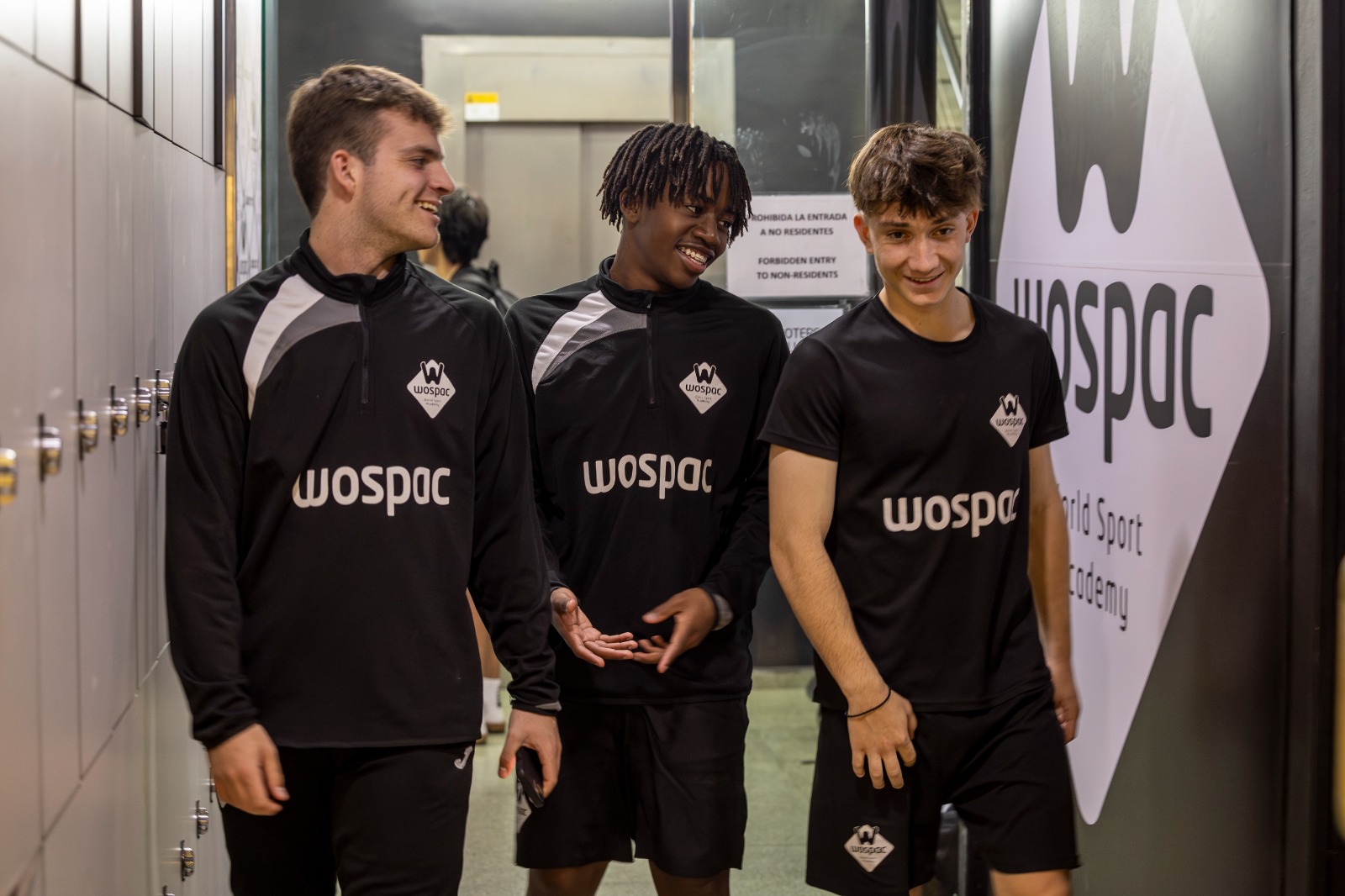
1 Day Summer Camp Boarding Program: A Wospac Structured Summer Experience
A brief experience is what a 1 day summer camp boarding program aims to provide. Their goal is to combine activities, learning, and boarding under supervision in a single day. Such programs are usually picked by families who want a concentrated introduction to the life of the camp without making a long-term commitment. The format gives the opportunity to experience organized schedules, interaction with the group, and guided activities in a safe place. In contrast to the long summer camps, a one-day boarding program Wospac concentrates on the intensity and the balance of the day. People enrolled in the program are to take part in planned sessions which can be sports, creative workshops, teamwork exercises, or educational modules. The boarding aspect brings in the idea of responsibility and routine, even though the time is short. Overview and Core Structure of the Program A 1 Day Summer Camp Boarding Program revolves around a very detailed timetable. Every movement from the arrival to the departure is planned out to ensure safety, engagement, and continuity. Typically, the program starts with orientation and group allocation and then moves on to the activity blocks and rest periods which are under supervision. The boarding part, even if it is only for a single day, acquaints the participants with the shared accommodation rules and routines. It may also comprise assigned spaces, supervised downtime, and the structured transitions from one activity to another. The purpose is to make a realistic yet manageable camp environment. Such programs are frequently appreciated for their being predictable. Parents and participants know the length, content, and organization ahead of time. Feature Description Program length Single full day Activity format Scheduled group activities Boarding element Supervised short-term stay Supervision Trained staff oversight Environment Controlled camp setting This table highlights common structural elements without implying specific outcomes. Educational and Developmental Value Even a short 1 Day Summer Camp Boarding Program has the potential to impart essential skills and developmental awareness. As part of the introduction, participants get to know structured group dynamics, time management, and shared responsibility. These components are frequently the core of longer camp programs, hence, the one-day format serves as a great preliminary. Most of the activities are set up to attract the participants' involvement rather than their mastery of the skills. Team-based exercises, creative sessions, or guided challenges are some of the ways through which participants' social and mental engagement is achieved. The emphasis is laid on experience and interaction rather than on performance. Program Activities and Daily Flow The daily flow of a 1 Day Summer Camp Boarding Program is generally broken down into different phases that are clearly distinguished from each other. Each phase has its own specific function and keeps the energy going during the whole day. Orientation and Group Integration The program normally kicks off with orientation. Participants get introduced to the staff, find out the basic rules, and join small groups. This step is all about setting expectations and giving everyone a feeling of being part [...]
How to use the blog for clearer football decisions
Barcelona Football Academy Blog is most useful when readers are trying to connect football questions with better decisions. The value is not in volume alone, but in finding the pieces that genuinely clarify the next step.
A stronger reading path usually mixes guidance, comparison and real-world context so that the bigger picture becomes easier to judge.
That is what turns Barcelona Football Academy Blog into something practical rather than just another article list.
What type of reading usually helps most
It helps readers who want to move from broad curiosity to more confident football choices.
- Start with the guides that answer the biggest open question first.
- Mix comparison pieces with practical examples to build a fuller view.
- Use the reading path to make the next football conversation more specific.
Useful reading paths from here
What Parents and Players Should Look for in a Soccer Academy in Barcelona
Use a clearer comparison checklist before choosing a football environment.
Soccer Academy Barcelona Options: Full Boarding, Short Stay, or Day Program?
Compare the main format differences in one calmer side-by-side view.
Academy Progression Stories vs Trial-Only Results: What Matters Most
See why long-term development often tells a fuller story than a single trial result.
Questions readers often ask when choosing what to read next
What should readers start with first?
The best starting point is usually the article that answers the biggest open question, whether that is fit, format, costs or daily life.
How does the blog help with football decisions?
It becomes most useful when comparison pieces, practical guides and real-world examples are read together rather than in isolation.
What kind of reading path usually helps most?
A short route from broad explanation to side-by-side comparison and then to practical next steps usually creates the clearest overall picture.
Use the next article to answer the biggest open question
Whether the decision is between a longer residential option, a shorter first step, or a football-and-education route, clearer information around Barcelona Football Academy Blog makes the next move easier.
Start with these stronger football reads
Questions readers often ask when choosing what to read next
What is the best way to compare choices after Blog?
They usually do best when they compare training demand, living format, study balance, timing and the level of support around the player’s week after reading Blog.
What often helps readers decide after looking at Blog?
A short list of realistic options, each judged against the player’s readiness rather than only ambition, usually makes the choice easier once Blog is understood.
What usually comes next after Blog?
Most readers benefit from moving from the general overview in Blog to a more specific programme or contact path that matches the player’s current needs.
Why does clarity matter when looking at Blog?
Programmes can look similar from a distance while working very differently in real life. Clearer detail after Blog usually saves time and leads to a better fit.