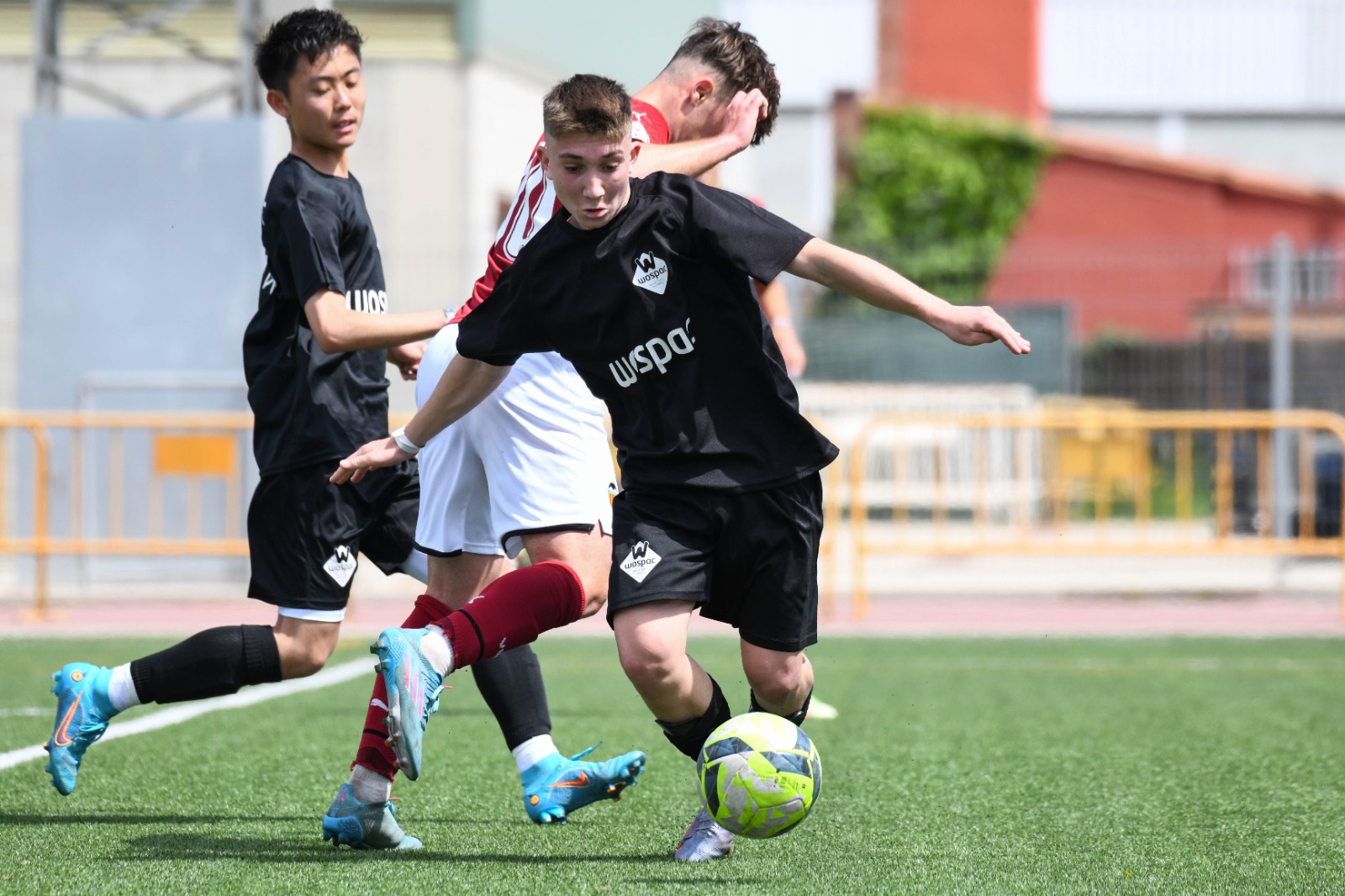
A residential football camp brings training and living arrangements into the same stay. Its suitability depends on the actual programme, the player and the practical support available. A Professional Boarding Football Camp should therefore be assessed through more than its label. Establish the organiser, dates, coaching group and accommodation before comparing the experience with a short clinic or a longer academy stay.
WOSPAC’s Barcelona offer needs to describe the activities and services proposed for the booking. A professional or high-performance description does not establish equivalence with a club environment, an individual workload or a predictable development result. Clear information helps a player decide whether the stay fits present experience and commitments.
What Defines a Professional Boarding Football Camp
A boarding camp combines the football schedule with somewhere to live. The operator, residence location and staff coverage should be stated, along with the sessions and other activities included. Living near training does not automatically mean daily practice, constant supervision or freedom from practical concerns.
Compare the whole timetable: travel, meals, organised activities, rest and free time. The difference from a non-residential camp lies in the arrangements actually booked, not in an assurance that immersion produces faster development. Ask how a new participant joins the group and how everyday questions are handled.
Players may wish to explore the following aims, while checking how the actual programme supports them:
- Follow the agreed training schedule and discuss practical difficulties
- Adapt to professional expectations and routines
- Build discipline, responsibility, and focus
- Experience football as a full-time commitment
A clear plan can reduce uncertainty about the stay, but it cannot remove every distraction or responsibility. Keep the agreed schedule and contact arrangements available, and ask who handles changes. Practical organisation should support participation without being presented as a guarantee of improvement.
Training Structure and Performance Methodology
Training can address technique, decisions in play and physical preparation in different ways. Ask how the advertised group level and session format are established, and what feedback is included. A list of development areas is not proof that every session balances them perfectly.
Possible practice subjects to discuss include:
- Receiving, passing and other technical actions in a game-related task.
- Noticing space, teammates and opponents before making a decision.
- Understanding positioning and the responsibilities of a role.
- Physical preparation within the actual programme and group level.
- Concentration, communication and choices during competitive practice.
Exercises and game practice can explore different problems. The useful question is what an activity is intended to practise and how instructions are explained. Feedback about a particular action can give the next session a focus without establishing a fixed rate of progress.
Ask about workload and time for rest, and how concerns are raised. Conditioning, mobility work and separately qualified clinical care should not be conflated. A camp cannot guarantee avoidance of burnout, injury or fatigue, and its timetable is not an individual medical or recovery plan.
Living Environment and Player Supervision
Accommodation needs its own practical description: operator, address, room arrangements, access conditions and staff availability. Establish what supervision applies at different times rather than assuming that the residential format ensures security or comfort for everyone. Sharing a residence can involve different habits and support needs.
Everyday responsibilities may be discussed as part of a stay, but they should not be equated with life in professional football. Any expectation about equipment, shared areas or attendance should be understandable before arrival.
Details to establish for the proposed accommodation include:
- Which meals are included, their times and how dietary requirements are discussed.
- How the timetable allows rest alongside travel and organised activities.
- The free-time arrangements and the staff coverage that applies.
- The residence rules and how questions or concerns can be raised.
Parents and players need a clear account of who is responsible for each part of the stay. Residence staff, coaches and separately qualified support providers have different roles. A controlled entrance or organised routine should not be used to promise peace of mind, maturity or freedom from difficulties.
Considering whether a boarding camp fits the player
Suitability starts with age, experience, the intended duration and the joining requirements. A player looking for a short introduction may need different information from someone considering a longer residential commitment. Discuss the actual group and schedule rather than treating willingness to train hard as the only criterion.
Questions may differ for:
- Players considering a future assessment, with any actual trial arranged separately.
- Players seeking an introduction to a different football setting and language.
- Players comparing a camp with their current club and seasonal commitments.
- Players who want a defined subject for coaching feedback during a short stay.
- Players considering the practical demands of a longer residential programme.
A stay can provide information about the activities experienced and the support available. That is different from revealing hidden potential or proving readiness for another level. A review should describe specific observations, leaving future admission and selection decisions with the relevant organisations.
Assessing a football camp in Spain
Spain’s football setting can be part of the attraction, but a location does not establish one coaching approach or make it suitable for every player. Compare the proposed activities and the people responsible for them. For a Barcelona stay, practical questions include:
- The actual training and residence locations, travel and staff arrangements.
- The schedule and venue availability for the booked season and dates.
- Which facilities are accessible and how any separately qualified health service is arranged.
- The coaching language, group level and support for understanding instructions.
The length and purpose of a stay should be judged on the specific offer. A national football tradition does not guarantee a comprehensive education or a superior development experience. For international players, practical preparation can include understanding the language used, arrival arrangements and who handles routine questions. Adjustment and participation differ between people; nationality or location cannot promise equal experiences, cultural harmony or a particular performance standard.
Personal Growth Through Immersion
Time away from familiar routines can raise useful practical questions. Discuss what the actual stay requires rather than assuming that living elsewhere produces independence. Personal-development aims may include learning to:
- Organize your responsibilities and routines.
- Interact within a group context.
- Manage physical and mental requirements.
- Accept feedback with a positive attitude.
These are aims to discuss, with different starting points and responses. A concrete review can describe how a player handled a particular responsibility or question during the stay. It should not claim that most participants leave more mature or that parents immediately observe better habits without evidence.
How a Boarding Camp Fits Into Long-Term Development
A camp can be considered alongside existing football and study commitments. Any academy admission, gap-year arrangement or professional assessment needs its own requirements and decision. Before comparing a next step, a player may wish to:
- Understand the expectations and services of the programme being considered.
- Discuss the proposed training workload rather than seek maximum intensity for its own sake.
- Review observations without treating them as a certificate of readiness.
- Identify specific topics to practise and questions for the next coaching discussion.
Keep the camp experience separate from the next booking decision. Compare the confirmed timetable, support, costs and entry conditions of any proposed longer stay. Feedback can inform that conversation, but it does not guarantee admission, a trial or selection by a club.
A clear purpose for a focused stay
A short stay is easier to assess when its purpose is specific. The player might want to understand the group format, experience the agreed sessions or discuss a particular training subject. A realistic goal gives feedback a clearer focus than a general promise of accelerated development.
Ask WOSPAC what would be provided for the relevant dates and what review, if any, is included. The experience does not by itself establish whether someone is ready for greater demands. That judgement needs context, including the player’s existing commitments and any separate organisation’s assessment criteria.
Reviewing the camp on its actual terms
The value of a booking rests on the activities and arrangements agreed. Review what is included, who is responsible and how changes or difficulties are handled. A residential format may offer opportunities to practise routines and take part in a group, with individual responses.
For a Barcelona stay, obtain the particular proposal from WOSPAC and compare it with the player’s needs. Keep training, accommodation and any specialist support clearly described. A camp can provide an experience to discuss and reflect on without promising personal transformation, confidence or preparation for a professional future.
Helpful follow-on reads after Professional Boarding Football Camp: A Complete Immersive Experience for Serious Players
Questions about a boarding football camp
How should the camp timetable be considered as a whole?
Compare the actual sessions with travel, meals, rest and free time for the proposed dates. Ask about group level and workload rather than assuming that a residential camp means daily maximum-intensity training.
What distinguishes residence supervision from a security guarantee?
Supervision is a specific arrangement involving the operator, staff coverage, access and contact procedures. It should be described for the stay; the word supervised cannot guarantee security, comfort or freedom from difficulties.
Can a camp review prove readiness for a longer academy programme?
A review can describe observations from the activities experienced. Admission to another programme has separate requirements and decisions, so feedback should not be treated as a readiness certificate or an entitlement to a place.
How should recovery support be distinguished from routine camp activities?
Rest and physical preparation are parts of a timetable to clarify. Physiotherapy, medical care or other specialist services require their own qualified provider and access terms where offered; a camp cannot guarantee recovery or injury avoidance.